ADHD-first task system

Your ADHD brain,
but organized

A todo app designed for how your brain actually works. Not another list. Not another guilt trip.

Focus mode Energy matching Body doubling

iOS, iPad, and macOS

Not another todo app

Every feature exists because generic apps failed us.

Just this one thing

Focus mode shows ONE task. Big. Bold. No list of 47 things making you feel behind.

Energy matching

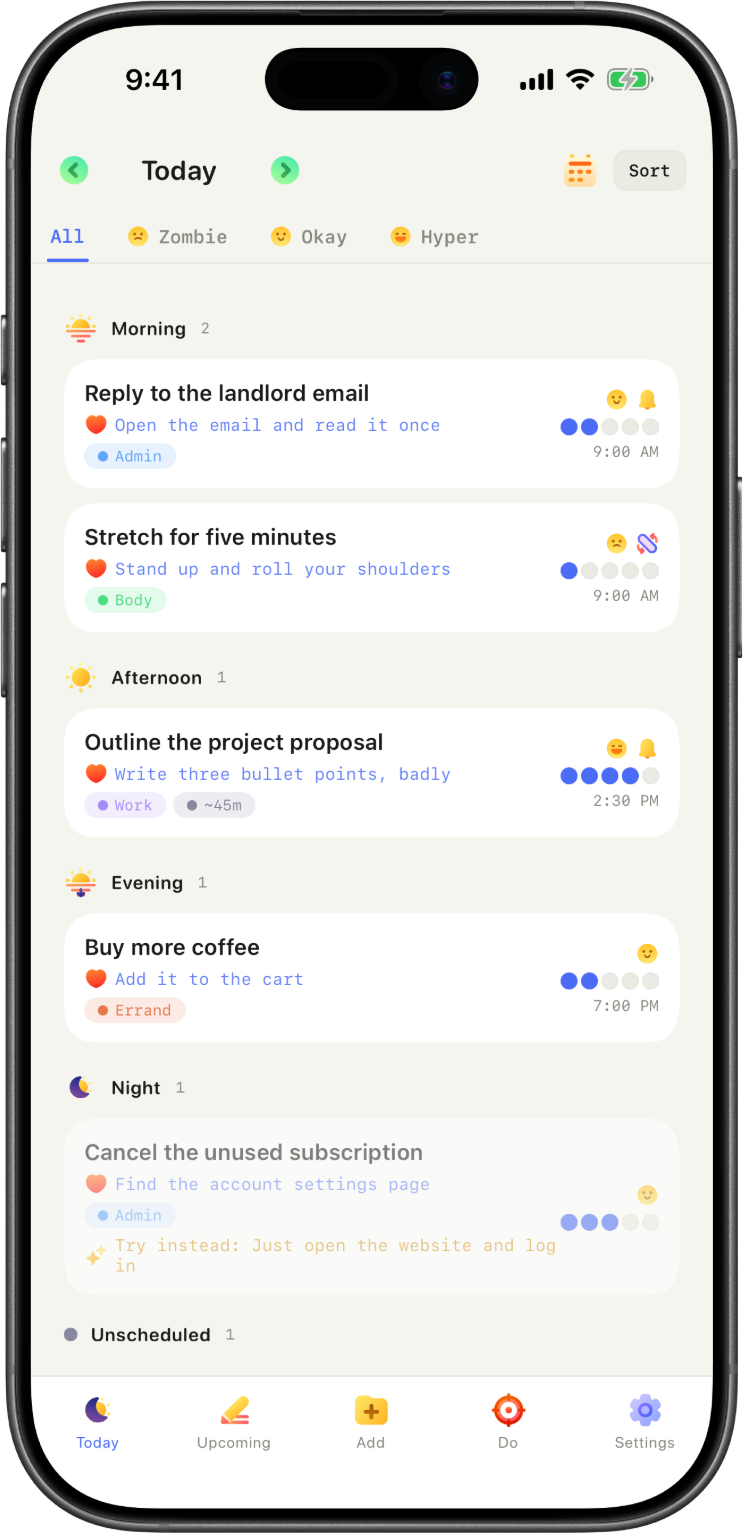
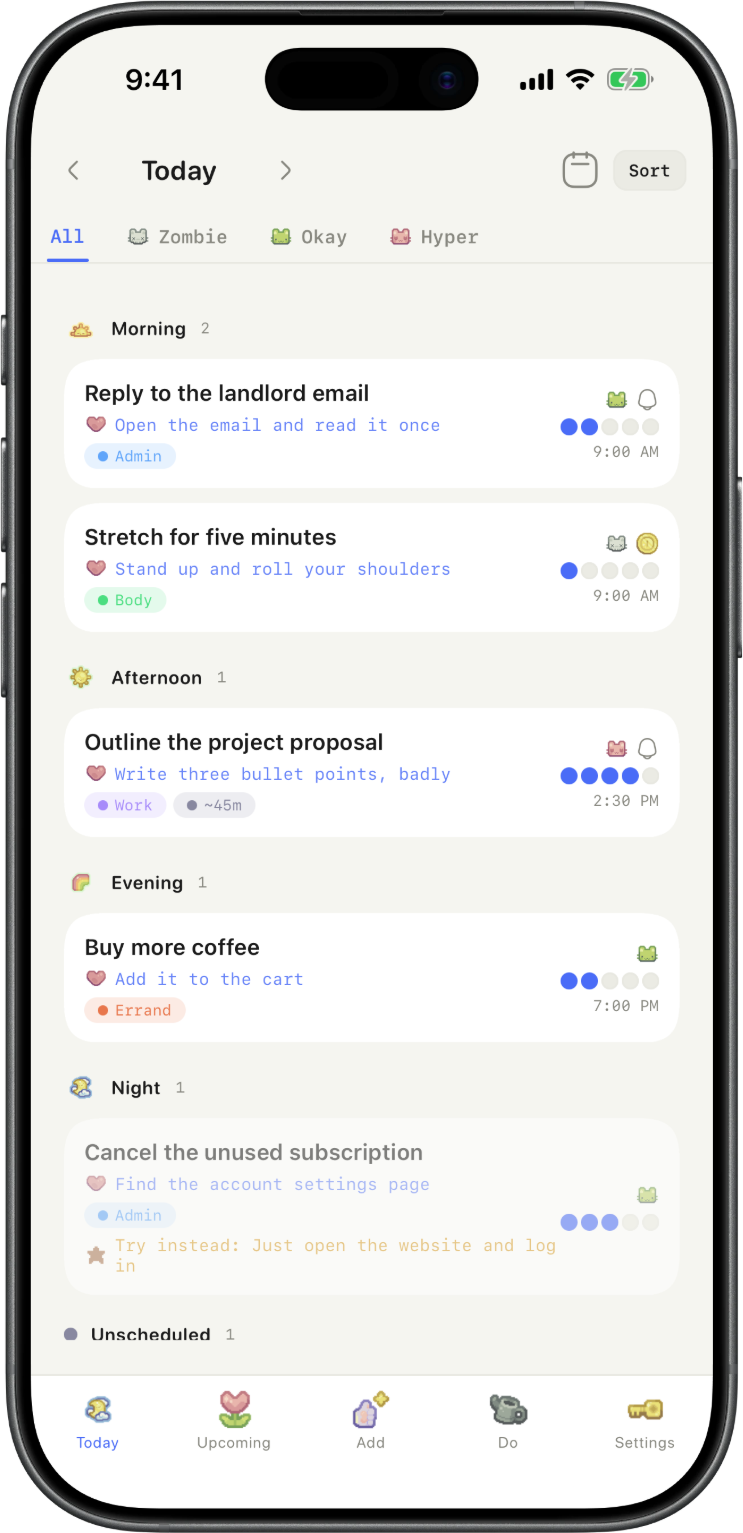
Feeling like a zombie? Easy tasks. Hyperfocus mode? Bring the hard stuff. Tasks match your energy.

2-minute door opener

Not "clean the kitchen." The first step is "open the dishwasher." The tiniest action to just start.

Progress, not perfection

5-stage progress bar. Thought about it, started, halfway, almost, done. Half done isn't failure.

Task decay

Untouched tasks fade and auto-archive. If it wasn't important enough to do in 2 weeks, let it go.

Daily cap

Hard limit on tasks per day. Prevents the "I'll do 27 things today" Monday morning trap.

"Oh wait..." capture

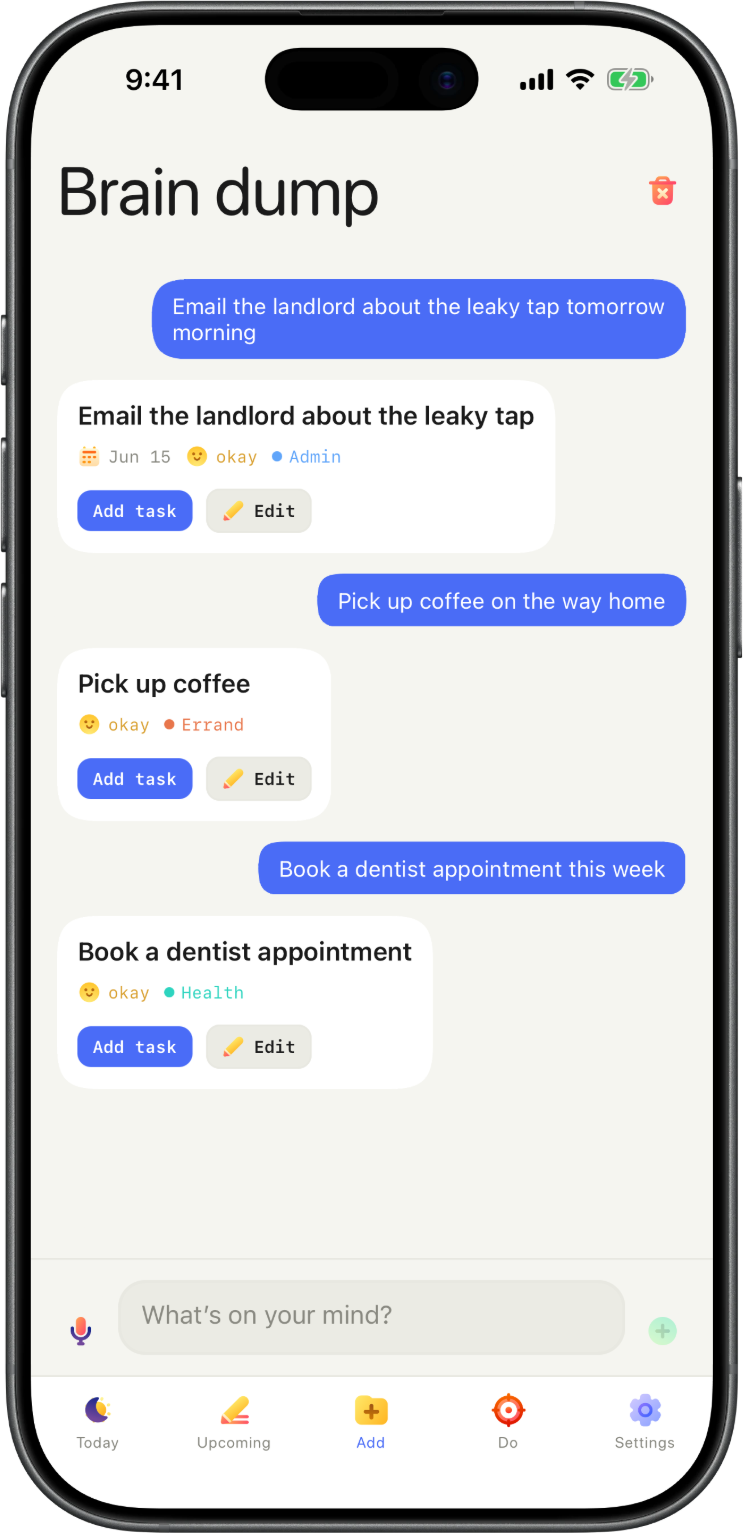
Random thought mid-task? One tap, dump it, sort later. Or never. No judgment.

Body doubling timer

Pomodoro timer with a companion message. "Someone's here with you. You're not alone."

"Not today" isn't failure

Defer a task guilt-free. It asks "when then?" Tomorrow, next week, or pick a date. The language matters. Not "I failed" but "I chose."

Simple pricing

Free to start. Premium when you're ready.

Free

  • 5 active tasks
  • 10 captures
  • 6 preset themes
  • Focus mode, timer, board view
  • iCloud sync

Frequently asked questions

What is Ikoi?
Ikoi is a todo app designed for ADHD brains. It runs on iOS, iPadOS, and macOS. Instead of optimizing capture and infinite storage like generic todo apps, Ikoi focuses on single-task execution: Focus mode shows one task at a time, energy matching surfaces tasks sized to how you actually feel, and untouched tasks fade out instead of piling up as a guilt backlog.
How is Ikoi different from Todoist, Things, or TickTick?
Generic todo apps assume the list view is where you live between tasks and that infinite storage is a feature. For ADHD brains, both assumptions backfire: a long list charges working memory every time you open it, and a permanent backlog is a permanent guilt loop. Ikoi defaults to a single-task execution view, requires a 2-minute first step on every task, fades old untouched tasks, and replaces "overdue red" with decay.
What is task decay, and will it delete my tasks?
Task decay fades tasks you haven't touched in a configurable number of days (default 21) and eventually moves them off the main list. Decayed tasks are archived, not deleted — they're still accessible behind a gesture. The default surface of the app simply stops asking about them. The threshold is adjustable.
What does Focus mode do?
Focus mode shows exactly one task at a time, with its first 2-minute step and an elapsed timer. The rest of the list is hidden by default. The list is one swipe away when you need to re-plan, but during execution the screen is quiet. This is the design move that reduces transition cost between tasks, which for ADHD users is the dominant cost in a productivity tool.
How much does Ikoi cost?
There's a free tier with 5 active tasks, 10 captures, 6 preset themes, Focus mode, the timer, board view, and iCloud sync. Premium starts at $2.99/month, $19.99/year, or $29.99 lifetime, and unlocks unlimited tasks and captures, custom theme creation, icon set import, an adjustable daily cap, and JSON theme export.
What platforms does Ikoi run on?
iOS, iPadOS, and macOS. It's available on the App Store as a single universal purchase. iCloud sync keeps everything in step across devices.
What is the 2-minute door opener field?
Every task in Ikoi requires a first 2-minute action — the smallest physical step that puts you inside the task. Not "clean the kitchen" but "open the dishwasher." Not "write the proposal" but "open a doc and type the title." The field is required because optional first-step fields get skipped during clarity and missed during depletion, and that's where ADHD task initiation breaks down.
What is body doubling and how does Ikoi do it?
Body doubling is the ADHD-friendly practice of working alongside someone else, real or virtual, to reduce the friction of starting. Ikoi's timer includes a companion presence with a brief on-screen message — "Someone's here with you. You're not alone." — so a solo work session feels less solo without requiring a real human to be on a call.

Ready to try?

Available on the App Store for iOS, iPad, and macOS.

Get Ikoi on the App Store